
Stitch Studies No. 01: Tank Top—Learning to Read a Pattern
Learning how to sew has been on my crafting bucket list for ages. Last year, I took the first step by sitting down with my aunt to make matching smocked dresses for my daughter and niece.
This year, I enrolled in some basic sewing courses from my local university’s continuing education program for adults, and it’s been a truly transformative experience. In just a couple of months, I’ve gone from being intimidated by my sewing machine to swapping out broken needles, winding bobbins, toggling between stitch lengths, and reading patterns.
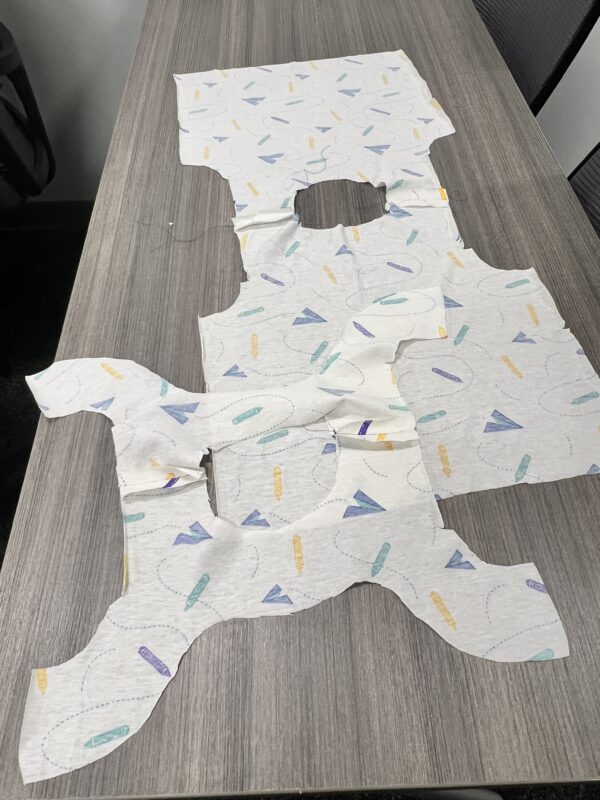
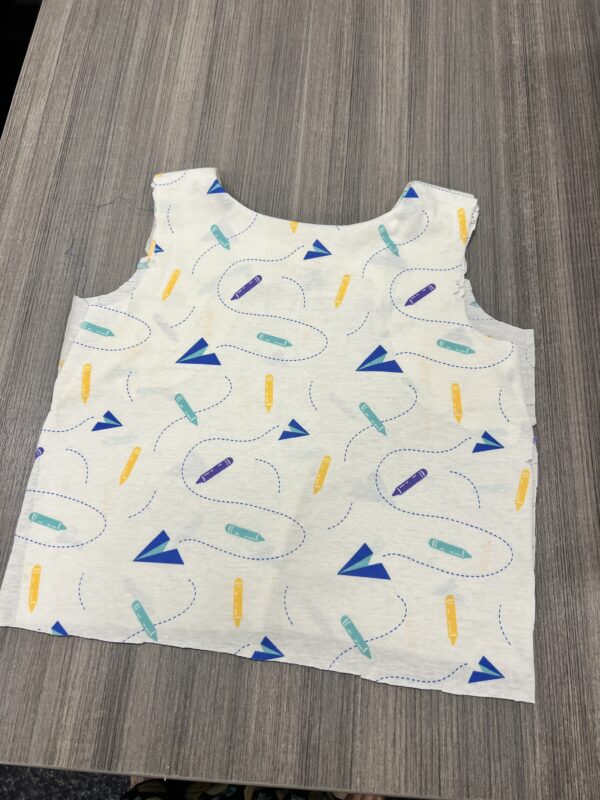
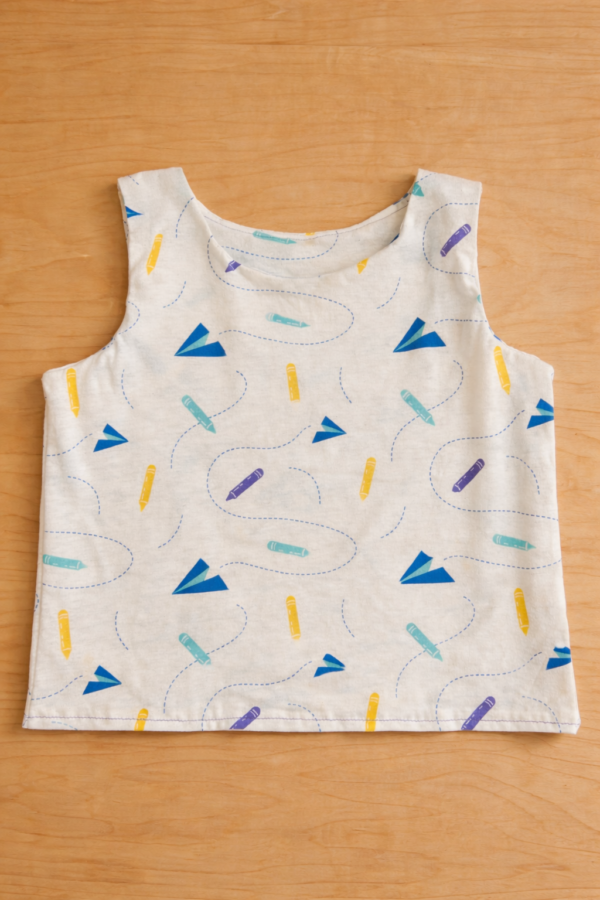
This week’s project was a tank top—my first real attempt at following a pattern from start to finish. The pattern was provided by the instructor (a size 3T child’s tank top), and while I was a little nervous at the outset, I was ultimately pleased with the finished garment and thrilled with all I learned during the process.
Some key lessons I learned first-hand:
- Check, double check, and triple check the arrangement of your pattern pieces on your fabric before cutting. Pattern-facing or right side vs. wrong side, grain direction, and placement all matter.
- If the pattern calls for you to “place on fold,” that instruction is not optional. Follow the directions to the letter.
- Transfer all markings denoted on the pattern (notches, dots, and darts) to your fabric using tailor’s chalk or a fabric pen.
- While pinning pattern pieces is helpful, outlining them in tailor’s chalk removes guesswork when cutting
- Using dedicated fabric scissors is essential when cutting out your fabric. Dull blades are not your friend.
- After cutting, match your notches carefully to ensure pieces align properly during assembly.
- Take your time when sewing around a curve. Slow and steady wins the race; rushing leads to tears and seam ripping.
I also learned how facings work and realized I’m not really a fan. I have a couple of tank tops in my closet that use them around the neckline, and they never seem to lay flat unless you press them. I mentioned my frustration about that to my instructor, and she showed me how to “stitch in the ditch” near the armhole to keep the facing lying flat. While that was helpful, I think I’d like to explore alternatives to facings in future projects.